


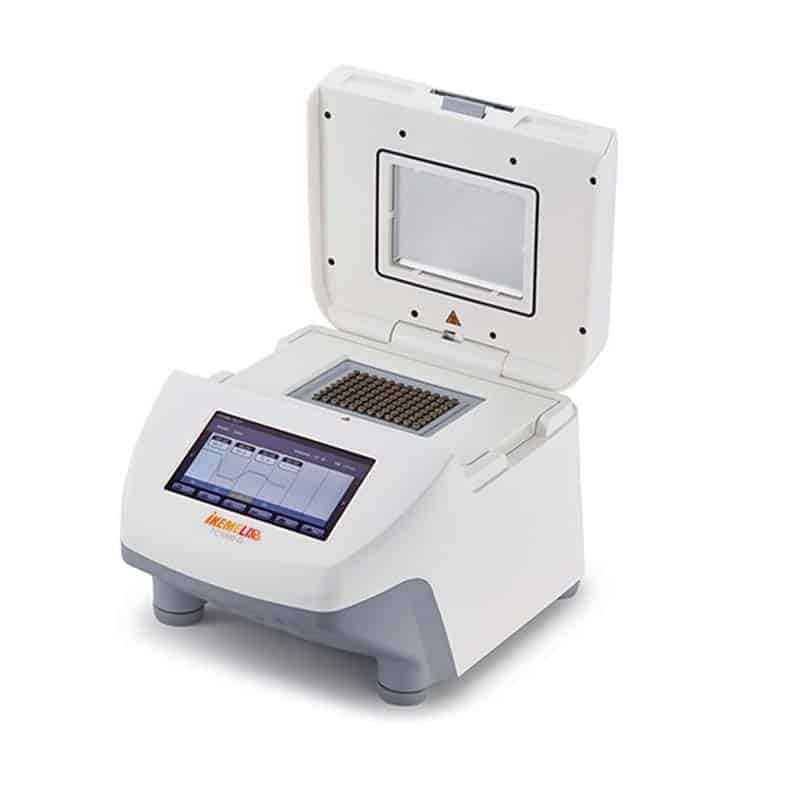
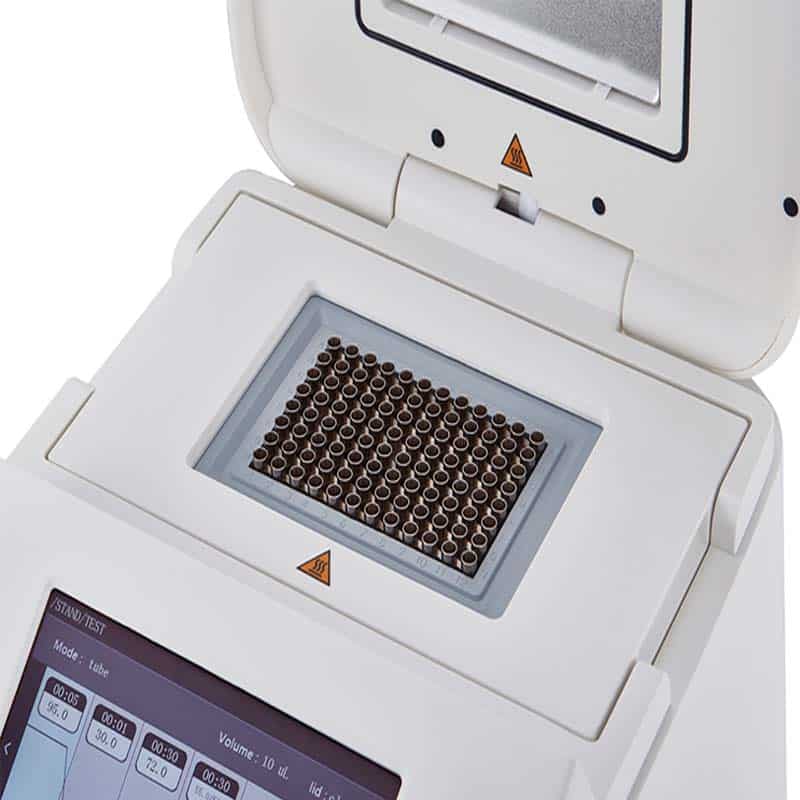
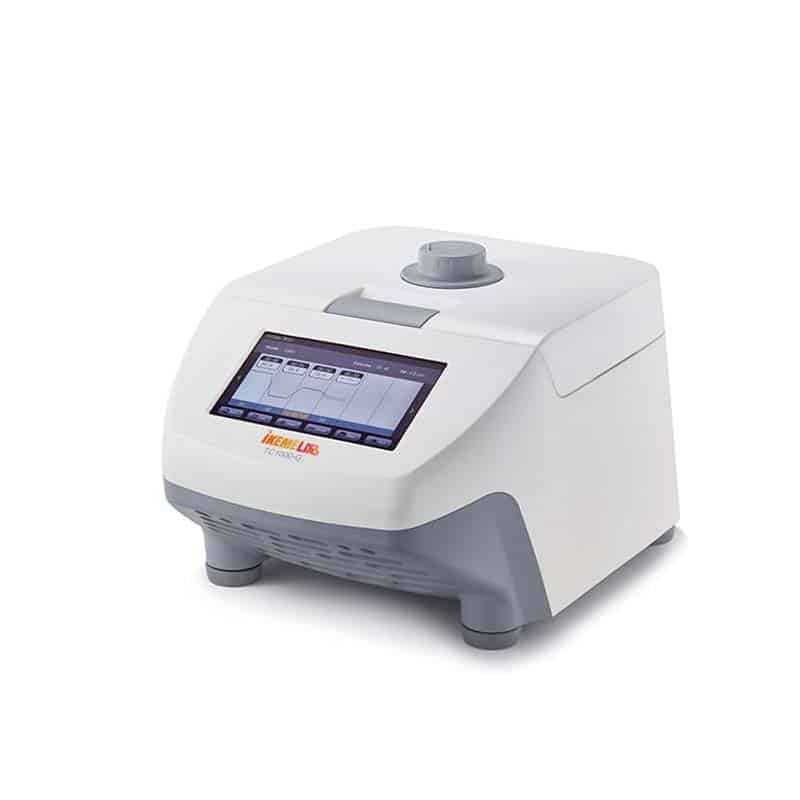

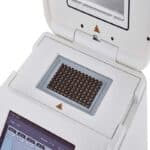
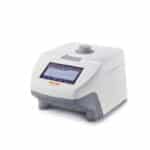

Real Time PCR System
1,520.00৳
-
Product name:Real-time PCR Instrument
-
Model Number:TC1000-G
-
Brand Name:IKEME
-
Lid Temperature Range:30-110℃
-
Heating Temperature Range:4-105℃
-
User defined file system:Max. 30 segments 99 cycles max. 16 folder and 16 files each folder
-
Sample Capacity:96X0.2mL PCR tube, 8X12 PCR plate or 96 well plate
-
Type:Biochemical Analysis System
-
Display:7″ LCD 800×480
-
Certificate:CE
-
Single package size:56X40X39 cm
-
Single gross weight:18.0 KG
TC1000-G
Key Features
• Reliable heating/cooling elements and precise temperature control
• Unique design of block ensures the temperature uniformity and repeatable results
• 7 inch Large color touch panel screen for easy programming with user friendly software
• High performance DSP and temperature control
• Fast heating and cooling rate
• Large user program storage
TC1000-S
Key Features
• Reliable heating/cooling elements and precise temperature control
• Unique design of block ensures the temperature uniformity and repeatable results
• 7 inch Large color touch panel screen for easy programming with user friendly software
• High performance DSP and temperature control
• Fast heating and cooling rate
• Large user program storage
| Specifications | TC1000-G | TC1000-S |
|---|---|---|
| Sample Capacity | 96X0.2mL PCR tube, 8X12 PCR plate or 96 well plate |
96X0.2mL PCR tube,
8X12 PCR plate or 96 well plate
|
| Heating Temperature Range | 4-105℃ | 4-105℃ |
| Lid Temperature Range | 30-110℃ | 30-110℃ |
| Temperature Display Accuracy | ±0.1℃ | ±0.1℃ |
| Temperature Control Accuracy [at 55℃] | ±0.3℃ | ±0.3℃ |
| Temperature uniformity[at 55℃] | <0.3℃ | <0.3℃ |
| Max. Heating/Cooling Rate | 5℃Sec | 3℃/Sec |
| Gradient Temperature Setting Range | 30-99℃ | – |
| Gradient Range | 1-42℃ | – |
| Adapter block material | aluminum | aluminum |
| Display | 7” LCD 800×480 | 7” LCD 800×480 |
| Input | Touch panel | Touch panel |
| User defined file system | Max. 30 segments 99 cycles max. 16 folder and 16 files each folder |
Max. 30 segments 99 cycles max.
16 folder and 16 files each folder
|
| Power off protection | Yes | Yes |
| Power Supply | 100-120V/200-240V,50/60Hz | 100-120V/200-240V,50/60Hz |
| Dimension [D×W×H]( without the heating block ) | 280x370x250 mm | 280x370x250 mm |
| Weight | 11kg | 11kg |
1. Infectious diseases
The most valuable application area of PCR in medical laboratory science is the diagnosis of infectious diseases. In theory,
as long as a sample has a pathogen present, PCR can detect it. General laboratories can also detect 10-100 gene copies,
while the current pathogen antigen detection method generally requires 105-7 pathogens to be detected. The detection of
pathogens by PCR solves the “window period” problem of immunological detection and can determine whether the disease
is in a recessive or subclinical state.Quantitative PCR research data have shown that the number of pathogens is related to the
severity,infectivity and treatment effect of infectious diseases. Many studies have shown that after human immunodeficiency
virus (HIV) infection, the length of incubation period and the severity of clinical symptoms are significantly related to the viral
load in the blood; some studies have also shown that HIV is not infectious when the viral load is below a certain value.
In the quantitative study of hepatitis B virus and hepatitis C virus, it is found that the number of viruses is related to the efficacy
of certain drugs. For example, interferon therapy is not sensitive to hepatitis virus high copies, but sensitive to low copies; while
some drugs have the effect of significantly reducing the high copies of the virus.
2. Tumor
Increased expression and mutation of oncogenes can appear in many tumors in the early and benign stages. PCR technology
can not only effectively detect gene mutations, but also accurately detect the expression of oncogenes, which can be used for
early diagnosis, classification, staging and prognosis of tumors.The formation of BCR/ABL fusion gene caused by proto-oncogene
translocation can be detected in almost all patients with chronic myeloid leukemia. Quantitative PCR technology can determine the
number of trace residual malignant cells by detecting the expression of BCR/ABL fusion gene. Efficacy of treatment and basis for
estimating the risk of recurrence.Some viral carcinogenesis is also related to viral load, and the results of FQ-PCR assay for EB viral
load have been used for early detection and follow-up of nasopharyngeal carcinoma.
3. Genetic disease
The first clinical application of PCR technology began with the detection of genetic mutations in sickle cell and beta-thalassemia.
Mutations and deletions of genes can cause imbalances in the expression of various globin genes. FQ-PCR is an effective method
for the diagnosis of thalassemia to detect the differences in the expression of various globin genes.
Related products






Reviews
There are no reviews yet.